Monday, November 27, 2017

READ IT! - Introduction to Psalms 48-54

Readings for this week


Monday: Psalm 48
Tuesday: Psalm 49
Wednesday: Psalm 50
Thursday: Psalm 51
Friday: Psalm 52
Saturday: Psalm 53
Sunday: Psalm 54


Introduction to Psalms 48-54

Psalm 48


The Sons of Korah say, “Great is the LORD, and greatly to be praised! The joy of the whole earth is Mount Zion. O God, we ponder your love in your temple.”

The term “Zion” in the Old Testament is used as a kind of code word for the coming kingdom of God. Zion was a symbol of God’s dominion over the whole earth, as well as the promise of a great future, when the Gentiles would come and submit to Israel’s God. The worship at the Temple was a foretaste of that future, when David’s kingdom would extend over all humanity forever. The very presence of Zion in a human city, Jerusalem, was proof that God’s covenant was with people and that, unlike the gods of the nations, he would indeed dwell among us.


Psalm 49

The Sons of Korah say, “Hear this, all peoples! Man in his pomp will not endure. He is like the beasts that perish. But God will ransom my soul from Sheol.”

The psalmist portrayed death (or the grave) as an insatiable monster feeding upon its victims. The “grave” (Hebrew Sheol) refers in a general way to the realm of the dead, the netherworld, where, it was thought, departed spirits lived. The Israelites viewed death as the opposite of life, and resurrection was not yet a part of their communal experience with God. The grave in their view brought no escape from God, but just how the ancient Israelites viewed the condition of the godly dead is unclear.

Psalm 50

This is “a psalm of Asaph.”  Asaph, a Levite of the Gershonite family, was appointed over the service of praise during the time of David and Solomon. He led the singing, sounded cymbals before the ark and apparently set up a school of music. Twelve psalms are credited to Asaph, but this accreditation does not necessarily imply authorship and may mean no more than that these psalms constituted an Asaphic collection, begun by the great man and then prolonged over the years by the Asaph singers. The psalms themselves cover a long span of time, and have a deep and contemplative nature.

Psalm 50 is a “covenant lawsuit” brought by God against his consecrated ones, who made a covenant with him by sacrifice. This sort of legal practice was common in the Old Testament as a means by which God aired Israel’s shortcomings and justified his judgment upon the nation.

The psalmist says, “The Mighty One, God the LORD speaks: ‘I will not accept bulls and goats. For you hate discipline. Offer a sacrifice of thanksgiving.’"

Psalm 51

This Davidic psalm is introduced with the words: “When the prophet Nathan came to him after David had committed adultery with Bathsheba.”

David says, “Have mercy on me, O God! Cleanse me from my sin. Do not cast me away from your presence. A broken heart, O God, you will not despise.”

When David cries out to God in repentance after his sin with Bathsheba, he says, "Cleanse me with hyssop." This is not an insignificant request. Hyssop was used as a healing ointment for wounds. It cleansed the wound so that healing could begin, but this wasn't a comfortable process by any means. It hurt! It burned! David isn't saying "take my sin away from me," he is saying "burn this sin right out of me!" It'd be like saying, "God, pour battery acid on me until all the evil in me has been burned up!" Also, healing doesn't always come quickly. David never fully recovered from the consequences of his sin, however, his "wound" would never have been healed at all had it not first been "cleansed."

Psalm 52

This Davidic psalm is introduced with the words: “When Doeg the Edomite had gone to Saul and told him: ‘David has gone to the house of Ahimelech.’” This resulted in Saul murdering the priests who had aided David when he was fleeing Saul.

David says, “Why do you boast of evil, O mighty man? Surely God will bring you down to ruin. But I am like a green olive tree in the house of God.”

Although there is evidence that ancient Israel was far more forested than it is today, the presence of flourishing trees was still a sign of divine blessing for former nomads living on the fringes of a settled, agricultural society. The Old Testament presents a thriving tree as symbolic of the blessing of the righteous. This blessing is frequently contrasted with the sad state of the wicked, depicted in terms of nonproductive dryness. Olive trees, which live for hundreds of years, were not actually planted in the temple courts.

Psalm 53

David says, “The fool says in his heart, ‘There is no God.’ There is no one who does good. Will evildoers never learn? God has rejected them.”

Psalm 54

This Davidic psalm is introduced with the words: “When the Ziphites had gone to Saul and said, ‘Is not David hiding among us?’” This would have been when David was on the run from Saul who was trying to kill him.

David says, “Save me, O God! For strangers have risen against me. God is my helper. He will repay my enemies. I will praise your name, O LORD!”


Monday, November 20, 2017

READ IT! - Introduction to Psalms 42-47


Readings for this week

Monday: Numbers 36
Tuesday: Psalm 42
Wednesday: Psalm 43
Thursday: Psalm 44
Friday: Psalm 45
Saturday: Psalm 46
Sunday: Psalm 47


Introduction to Psalms 42-47

Book II

Psalms 42-43

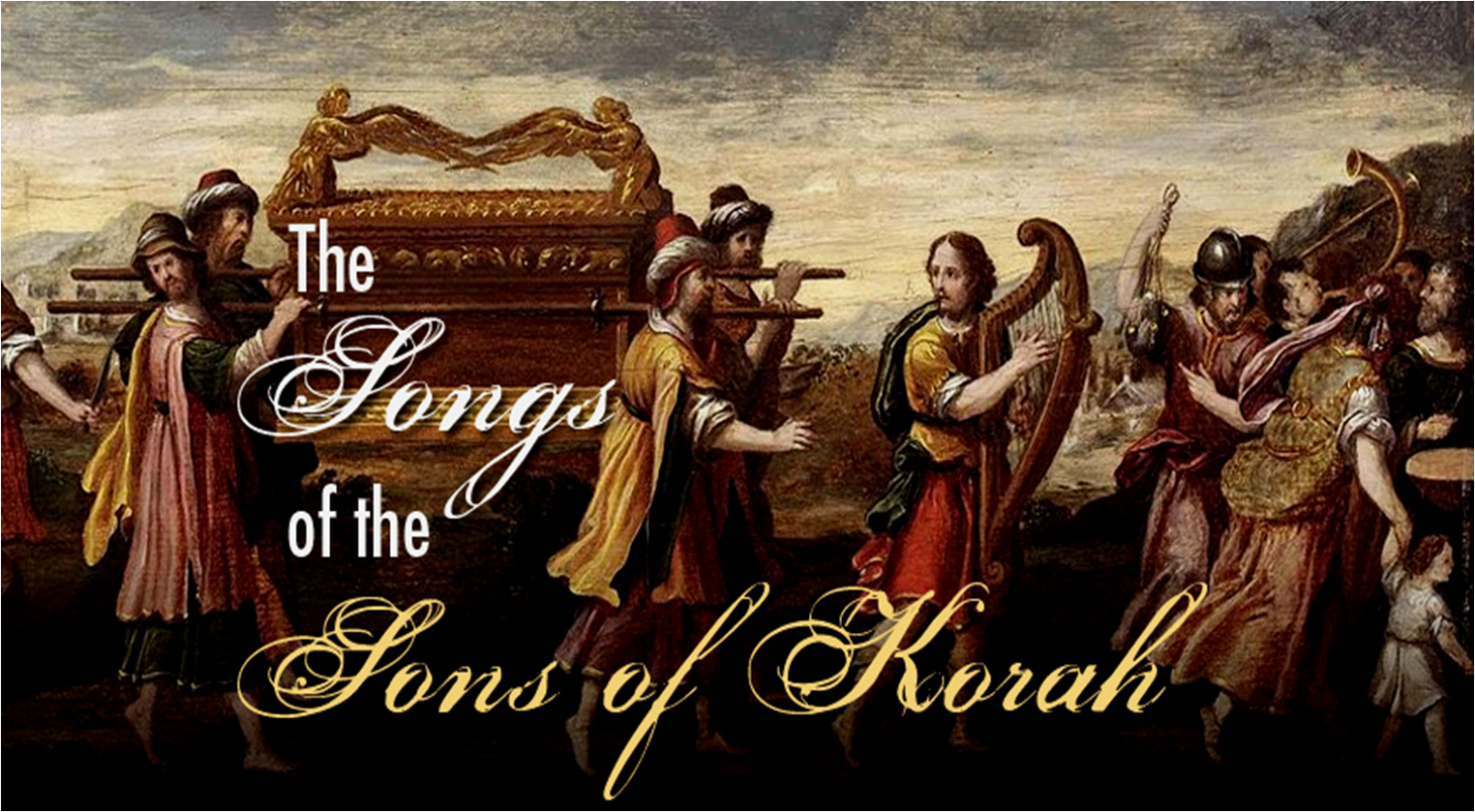
Several of the psalms that we find starting here in Book II of the Psalms are attributed to a group of people who referred to themselves as “The Sons of Korah.” Many of their psalms deal with some of the darker issues of human existence, such as dealing with death and depression.

Many of these psalms hint at the theme of resurrection from “Sheol” or the realm of the grave.

As the first Korah (see the Book of Numbers) fell into Sheol alive, so “The Sons of Korah” sing of being raised up out of Sheol alive.

In many Hebrew manuscripts Psalms 42 and 43 constitute one psalm.

The writer sings, “As the deer pants for water, so my soul longs for you, O God. Your waves break over me. Why are you downcast, O my soul? Hope in God.”

He continues, “Vindicate me, O God. Why have you rejected me? Send forth your light and your truth. Why are you downcast, O my soul? Hope in God.”

Psalm 44

The Sons of Korah sing, “O God, our fathers have told us how you drove out the nations. But now you have sold your people. Awake, O Lord! Rise up and help us.”

The “ungodly nation” referred to here may have been the Arameans of Damascus. Perhaps the author had been taken captive by the Arameans during one of their incursions into Judah.

Psalm 45

This psalm by the Sons of Korah was to be sung at weddings. It was based on a popular tune at the time that went by the title “Lilies”. This song was probably used at more than one royal wedding in David’s dynasty.

It says, “My heart overflows with verses for the king. Your God has anointed you with gladness. All glorious is the princess in her chamber.”

Psalm 46

The Sons of Korah say, “God is our refuge. We will not fear, though the earth give way. The nations rage, kingdoms fall. For God says, ‘Be still and know that I am God.’"

Psalm 47

The Sons of Korah say, “Clap your hands, you nations. How awesome is the LORD Most High! Sing praises to our God, sing praises. He is king of all the earth.”


Monday, November 13, 2017

READ IT! - Introduction to Numbers 29-36

Readings for this week

Monday: Numbers 29
Tuesday: Numbers 30
Wednesday: Numbers 31
Thursday: Numbers 32
Friday: Numbers 33
Saturday: Numbers 34
Sunday: Numbers 35

Introduction to Numbers 29-36

Chapters 29-30

Moses tells the people, “In the seventh month on first day sound the trumpets; on the tenth day make atonement; on the fifteenth day celebrate for seven days.” He then says, “When a man makes a vow he must not break his word. When a woman makes a vow it shall stand unless her father or husband forbids it.”

Chapter 31

God told Moses to order the Israelites in battle against Midian. Israel fought and killed five Midianite kings. Israel also killed Balaam son of Beor. This text says that Balaam was the one who had told the Midianite women to try and seduce the Israelites.

When Israel brought back all the plunder to the Plains of Moab where they had been camping, Moses was angry with them because they had let the women live. Moses told them to kill all the women who had slept with a man, but not the virgins. Moses also commanded anyone who had killed a person to stay outside the camp for seven days and go through the purification ceremony.

Chapters 32-36

The rest of the book of Numbers is made up of Moses giving instructions to the people on how to divide up the land once they entered into it.


Monday, November 6, 2017

READ IT! - Introduction to Numbers 22-28

Readings for this week

Monday: Numbers 22
Tuesday: Numbers 23
Wednesday: Numbers 24
Thursday: Numbers 25
Friday: Numbers 26
Saturday: Numbers 27
Sunday: Numbers 28

Introduction to Numbers 22-28

Chapter 22

Israel made camp on the Plains of Moab across the Jordan River from Jericho. Balak, the king of Moab, feared the Israelite presence in the land. He sent messengers to Aram to retrieve Balaam son of Beor. Balaam was a professional “curser.” Balak wanted Balaam to pronounce a curse upon Israel so that they would be destroyed. Balaam agreed to do it for a hefty sum of money.

Before Balaam arrived in Moab, God spoke to him and told him to only speak the words God would put into his mouth about Israel.

In 1967, an ancient manuscript was found at an excavation site in Jordan that contained the name of “Balaam son of Beor.” The text described Balaam as one who communicated with the gods at night. It also says that he had a vision of the god “El.”

As Balaam was traveling along the road, an angel stood ahead of him with a drawn sword. Balaam didn’t see the angel, but his donkey did and walked off the path. Balaam beat his donkey to get it back on the path. The angel stood in a different place between two walls of a vineyard. The donkey stopped walking and pushed up against the wall trying to escape and crushed Balaam’s foot. Balaam beat his donkey again. The angel moved to another place where the donkey could not escape from him. The donkey sat down and refused to move. Balaam beat his donkey again.

God caused the donkey to speak. The donkey says, "What have I done to you to make you beat me these three times?" Balaam says, "You have made a fool of me! If only I had a sword in my hand, I would kill you right now!" The donkey says, "Am I not your own donkey, which you have always ridden, to this day? Have I been in the habit of doing this to you?" Balaam says, "No."

The text then says that God caused Balaam to see the angel in the road. Balaam bowed down. The angel said: “Why have you beaten your donkey these three times? I have come here to oppose you because your path is a reckless one before me. The donkey saw me and turned away from me these three times. If it had not turned away, I would certainly have killed you by now, but I would have spared it.” The angel then told Balaam to continue on his journey, but to only say what he would tell him to say.

Balaam took his sweet time and Balak was a tad impatient by the time he arrived. Balak reminded Balaam of the money he had promised him. Balaam informed him that he would only be able to speak what the LORD would allow him to speak.

Chapters 23-24

Balak took Balaam up a mountain to view Israel and put a curse on them. God spoke and Balaam delivered His messages to Balak.

Balaam’s First Message: “How can I curse those whom God has not cursed?”

Balak took Balaam to another place where he could only see the outskirts of Israel’s camp and told him to curse Israel.

Balaam’s Second Message: “I have received a command to bless; he has blessed, and I cannot change it.”

Balak told him to neither curse them nor bless them at all. Balak took Balaam to another place and told him to curse Israel from there.

Balaam’s Third Message: “May those who bless you be blessed and those who curse you be cursed!”

Balak became angry after this third blessing and told Balaam to go home.

Balaam’s Fourth Message: “A star will come out of Jacob; a scepter will rise out of Israel. He will crush the foreheads of Moab... Edom will be conquered…but Israel will grow strong.”

Balaam’s Fifth Message: “Amalek was first among the nations, but their end will be utter destruction.”

Balaam’s Sixth Message: “You Kenites will be destroyed when Ashur takes you captive.”

Balaam’s Seventh Message: “Alas! Who can live when God does this? Ships will come from the shores of Cyprus; they will subdue Ashur and Eber, but they too will come to ruin.”

Chapter 25

Many of the Israelites went over to the Moabites and “committed themselves to the Baal of Peor.” The text says “The LORD’s anger burned against them,” and he sent a plague among the people. God told Moses to command the Israelites to kill everyone who had aligned themselves with Baal and the Moabites.

While Moses and the elders were weeping at the Tabernacle, an Israelite man brought a Midianite woman into the camp in front of everyone. Phinehas, Aaron’s grandson, grabbed his spear and drove it through both of them and the plague finally stopped. The text says that 24,000 people died from the plague. Israel and Midian became enemies over this incident.

Chapter 26

Moses takes another census because so many people died since the last one. This took place on the Plains of Moab near the Jordan River across from the city of Jericho. The text says that the people counted in this census were completely different from the people in the last census. All the people recorded in the first census had died in the desert except for Joshua and Caleb.

Chapters 27-28

God told Moses to climb a mountain and look out over the Promised Land. God told Moses to appoint Joshua as the new leader of Israel because Moses would die before Israel entered the Promised Land. Moses and Eleazar the priest anointed Joshua in the presence of all of Israel.

God then says to bring offerings each morning and evening, on the Sabbath and on the first of the month, and to celebrate Passover and the Feast of Weeks.


Monday, October 30, 2017

READ IT! - Introduction to Numbers 15-21

Readings for this week

Monday: Numbers 15
Tuesday: Numbers 16
Wednesday: Numbers 17
Thursday: Numbers 18
Friday: Numbers 19
Saturday: Numbers 20
Sunday: Numbers 21


Introduction to Numbers 15-21

Chapter 15

God tells Moses that the Israelites and the foreigners who present offering sot God are to be considered the same. There is one law for them both. He also tells them to make an offering if they sin unintentionally, not just for willful sins. And he says that anyone who sins defiantly shall be cut off. And example is giving a man working on the Sabbath out of defiance, and the people stone him to death. The people also place tassels on their garments as visual reminders to follow God’s laws every day.

Chapter 16

Moses’ first-cousin, a Levite named Korah, along with three Reubenites named Dathan, Abiram, and On started a rebellion. 250 council members joined them and confronted Moses and Aaron, claiming they had just as much right to be priests as Aaron did. Moses is like, “Be content with the special role God already gave you.” Moses summoned Dathan and Abiram, but they refused to come, and were like... “Moses is a slave-master!” and “It’s Moses’ fault that we’re not in the Promised Land yet!” The rebels tried to make their own offerings to God, and Moses got angry and told God not to accept them. God told Moses and Aaron to get out of the way so that He could wipe out all of Israel. Moses says, “Please don’t destroy the innocent along with the guilty!”

Moses declared a test for the people to see who was Israel’s true leader: “If these men die a natural death then you will know I am not, but if the earth opens its mouth and swallows them up then you will know they were not.” As Moses was speaking, “the ground split open” and “the earth opened its mouth and swallowed” the rebels and they went down into “Sheol” alive. The other Israelites panicked and moved out of the way, thinking they would also fall into Sheol.

Fire also came out from the LORD and consumed the 250 men offering incense. God told Moses to use the gold from the censers of the dead men to cover the altar so the people wouldn’t forget what had happened.

The very next day, the people surrounded Moses and accused him of “killing the LORD’s people.” “The Glory of the LORD” came down in smoke and began slaughtering the people. Moses had Aaron grab his censer and quickly go out and offer atonement for the people. The text says, “He stood between the living and the dead, and the plague stopped.” 14,700 people died from the plague in addition to the people who had died in Korah’s rebellion.

Chapter 17

God proposed a test for the Israelites to prove to them who the rightful priest was. Moses asked each of the leaders of the twelve tribes to give him a staff with the name of their leader on it. God told Moses to put the twelve staffs in front of the Ark of the Covenant, and said to Israel that the man whose staff sprouted was the man that He had chosen. In the morning, Aaron’s staff had not only sprouted, but had also budded, blossomed, and produced almonds. God told Moses to put Aaron’s staff in front of the Ark as a sign to Israel warning them not to rebel. This story ends with the Israelites convinced that God is going to kill them all... which is funny because they apparently only decided this after seeing Aaron's staff blossom and not after seeing all of the terrible ways God had already punished them for their rebellion.

Chapters 18-19

The LORD told Aaron: "I have given you the Levites to work at the Tent of Meeting. Everything that is devoted to the LORD is yours." He also tells him to burn a heifer outside the camp for the water of cleansing. And anyone who is unclean and does not cleanse themselves shall be cut off.

Chapter 20

Israel arrived in the Desert of Zin. Here Miriam died. There was no water and the people rebelled against Moses again, saying, “We’d be better off dying from God’s plagues, or dying in Egypt!” God told Moses and Aaron to gather the people at a nearby rock. He said, “Speak to the rock…and it will pour out its water.” But Moses screamed at the people, calling them “marah.” He then wacked the rock twice with his staff and water came out. God told Moses and Aaron they had represented Him poorly, and he said, “Neither one of you will enter the Promised Land.”

Later, Moses sent a message to the Edomites to let them know that their “brother” Israel planned to pass through their territory. Edom told them not to come near. Moses responded that they would stay only on the main highway that went through their land. Edom again denied them, and sent out an army to block their way. Israel turned back and stayed away from Edom.

Later, God told Moses, Aaron, and Aaron’s son Eleazar, to go up to Mount Hor, and that there Aaron would die. Aaron “was gathered to his people,” and Eleazar took over as high priest. The people mourned 30 days.

Chapter 21

Moses led the Israelites through the desert to avoid going through Edom. They spoke against God and Moses. They wanted to go back to Egypt. They whined that there wasn’t enough food or water. God sent poisonous snakes to attack the Israelites. The Israelites confessed their sins and Moses prayed for them. God told Moses to make a bronze snake and put it on a pole. Anyone who had been bitten and looked at the bronze snake survived. In the New Testament, Jesus used the story of the bronze snake to explain his own death.

The Israelites moved from place to place:

Hormah, where they were raided by Canaanites
Oboth
Iye Abarim
Zered Valley
Alongside the Arnon, on the border between Moab and the Amorites
Beer, where Israel sang, “Spring up, O well!” and God gave them water.
Mattanah
Nahaliel
Bamoth
Moab, at the valley where the top of Pisgah overlooks the wasteland

Israel sent a message to Sihon of the Amorites and asked if they could pass through his land. Sihon gathered his army and attacked Israel. Israel defeated Sihon and claimed his territory, including territory he had previously stolen from the Moabites.

Moses sent spies to the city of Jazer. Israel then drove out the Amorites that lived there.

Israel then followed the road towards Bashan. Og, king of Bashan, and his army met Israel at Edrei and declared war on them. Israel defeated Og and took his land. Elsewhere, Og is described as a “giant.”