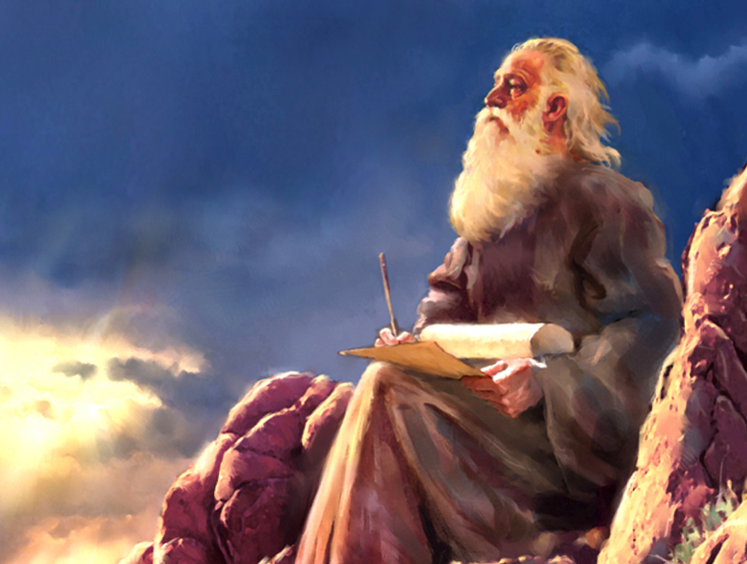
Introduction to Mark 1-4
Context of
Mark
Author:
Traditionally John Mark, traveling companion of Paul and “interpreter” for
Peter in Rome. The writer does not identify himself in the Gospel text, and
scholars, unable to verify the late-second-century tradition of Markan
authorship, regard the work as anonymous.
Date:
About AD 66-70, during the Jewish Revolt against Rome.
Place of composition:
Rome or Syria-Palestine.
Sources:
Sources:
Primarily oral tradition. Many scholars believe that Mark possibly used a few
written sources, such as a collection of Jesus’ parables (ch. 4), a compilation
of apocalyptic prophecies (ch. 13), and, perhaps, an older account of Jesus’
arrest, trial, and execution (chs. 14-15).
Audience:
Audience:
Gentile Christians suffering persecution.
Chapter 1
John appears in the wilderness and preaches a baptism of repentance. Many people are baptized by John in the Jordan River. Jesus is baptized by John and then led into the wilderness to be tempted. John gets arrested.
Jesus goes to Galilee and preaches. Jesus sees Simon and Andrew fishing on the Sea of Galilee and calls to them to follow Him so He can teach them to fish for people. They follow without hesitation. James and John do the same, leaving their father and his boat behind.
Jesus goes to Galilee and preaches. Jesus sees Simon and Andrew fishing on the Sea of Galilee and calls to them to follow Him so He can teach them to fish for people. They follow without hesitation. James and John do the same, leaving their father and his boat behind.
Jesus teaches at the synagogue in Capernaum on the Sabbath. The people are impressed with Jesus’ knowledge. A man with an evil spirit starts screaming at Jesus. Jesus tells the demon to shut up, and casts it out of the man. After this, news about Jesus begins to spread all around the region of Galilee.
Jesus and his disciples leave the synagogue and go to Simon and Andrew’s house. Simon’s mother-in-law is sick in bed, and Jesus takes her by the hand, heals her, and helps her out of bed. She then feeds them all as people begin to show up at the door to be healed. Jesus casts out even more demons and refuses to let them speak.
Jesus gets up before sunrise to go pray by himself. Simon and the others find him and say, “Everyone’s looking for you!” Jesus decides they need to move on to other towns for awhile, so they do.
A man with leprosy comes to Jesus and says, “If you are willing, you can make me clean.” Jesus says, “I am willing.” Jesus heals him tells him not to tell anyone and simply to go fulfill the Mosaic Law’s requirements for healings. Instead, the man goes out and tells everyone he meets. Jesus can no longer stay in towns because of this, and from now on he and his disciples sleep outside in “lonely places.”
Chapter 2
Jesus returns to Capernaum and preaches in a house. The house is filled to overflowing, so that people cannot get to Jesus. Some men cut a hole in the roof and lower their paralyzed friend
down so that Jesus can heal him. Jesus says, “Son, your sins are forgiven.” The teachers of the law didn’t care for that statement, and thought Jesus was
being blasphemous. Jesus knew what they were thinking, and says to them, "which is easier to say – 'Your sins are forgiven' or 'Get up and walk'?" He then heals the man just to prove that He has the authority to forgive
peoples’ sins.
Jesus is walking by the lake with crowds following him when he sees Levi sitting at the tax collector’s booth. He calls Levi, and Levi follows him. He later eats dinner at Levi’s house and the Pharisees disapprove of him eating with “sinners.” Jesus turns their views on their heads, saying, “It is not the healthy who need a doctor, but the sick.”
Jesus is then questioned about fasting.
Later, Jesus and his disciples are walking through a grain field on the Sabbath, and the disciples start picking heads of grain. The Pharisees accuse them of breaking Mosaic Law. Jesus reminds them that even King David broke the Law by eating the sacred bread when he and his men were starving to death. Jesus again turns their views on their heads, saying, “Sabbath was made for man, not man for the Sabbath.”
Chapter 3
Jesus goes to the synagogue on the Sabbath and sees a man with a shriveled hand. The Pharisees were watching to see if He would heal on the Sabbath. Jesus has the man stand in front of everyone, and asks them all “Which is
better, to save life or to kill?” Nobody says anything. Jesus becomes angry, and he turns and heals the man. The Pharisees then go out and plot Jesus’ death with the Herodians.
Jesus and his disciples withdraw to the Lake, and crowds from all over follow them. He heals people and casts out demons. The demons would say, “You are the Son of God.” But Jesus would order them not to speak about that
Jesus then appoints the twelve disciples to preach and to cast out demons.
Jesus and his disciples go to a house, and so many people show up that they can’t even eat. Jesus’ family thinks he’s crazy, and come to take charge of him. The teachers of the Law arrive from Jerusalem and they accuse Jesus of casting out demons by the power of Beelzebul. Jesus begins to speak in parables and says, “How can Satan drive out Satan?” Someone interrupts Jesus to let him know that his mother and brothers have arrived to take him home. Jesus responds, “Who are my mother and my brothers?” He then identifies those sitting in a circle around him – the ones who do the will of God – as his true family.
Jesus and his disciples withdraw to the Lake, and crowds from all over follow them. He heals people and casts out demons. The demons would say, “You are the Son of God.” But Jesus would order them not to speak about that
Jesus then appoints the twelve disciples to preach and to cast out demons.
Jesus and his disciples go to a house, and so many people show up that they can’t even eat. Jesus’ family thinks he’s crazy, and come to take charge of him. The teachers of the Law arrive from Jerusalem and they accuse Jesus of casting out demons by the power of Beelzebul. Jesus begins to speak in parables and says, “How can Satan drive out Satan?” Someone interrupts Jesus to let him know that his mother and brothers have arrived to take him home. Jesus responds, “Who are my mother and my brothers?” He then identifies those sitting in a circle around him – the ones who do the will of God – as his true family.
Chapter 4
Jesus tells the famous “Parable of the
Sower” and then tells a parable about “A Lamp on a Stand.” This parable can also be used to explain the
confusing idea of the “Messianic secret.” All secrets are ultimately intended
to be revealed – including the secret of Jesus as Messiah.
Jesus then tells “The Parable of the Growing Seed” and “The Parable of the Mustard Seed.”
At the end of a long day, Jesus and his disciples sail across the Lake away from the crowds. A storm quickly comes upon them, but Jesus sleeps through it. As the waves are breaking over the boat, the disciples wake Jesus up, saying, “Don’t you care if we drown?” Jesus gets up and tells the wind and the waves to shut up. The storm immediately stops, and Jesus asks the disciples why they were so afraid, and what happened to their faith. The disciples are terrified, and they wonder who this man could be… because they just don’t get it.
Jesus then tells “The Parable of the Growing Seed” and “The Parable of the Mustard Seed.”
At the end of a long day, Jesus and his disciples sail across the Lake away from the crowds. A storm quickly comes upon them, but Jesus sleeps through it. As the waves are breaking over the boat, the disciples wake Jesus up, saying, “Don’t you care if we drown?” Jesus gets up and tells the wind and the waves to shut up. The storm immediately stops, and Jesus asks the disciples why they were so afraid, and what happened to their faith. The disciples are terrified, and they wonder who this man could be… because they just don’t get it.